
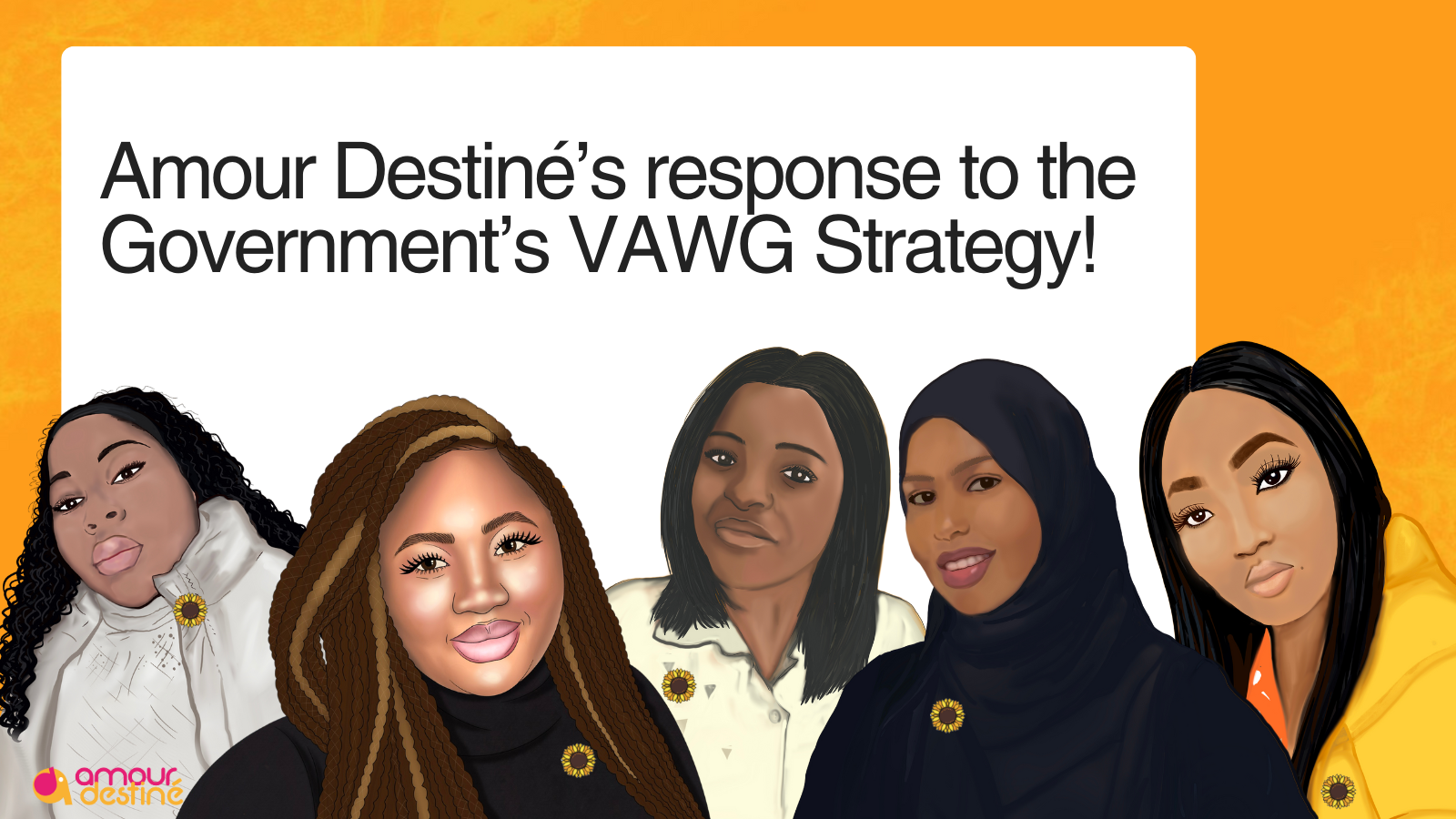
“Amour Destiné welcomes the Government’s Violence Against Women and Girls (VAWG) Strategy as an important opportunity to create lasting change. As a survivor-led, by and for organisation working with African, Caribbean and mix heritage women and girls, we see every day the strength, resilience and leadership that exists within our communities.
We believe real progress happens when lived experience is valued and communities are trusted to lead. By and for services play a vital role in keeping women safe. They are culturally specific, rooted in trust and often the first place women turn, particularly migrant women and those facing multiple forms of exclusion. With the right investment and support, these services can be powerful drivers of prevention, healing and long-term safety.
We are encouraged by the strategy’s focus on prevention and on holding perpetrators to account. Shifting responsibility away from survivors and towards changing harmful behaviour is essential to ending violence against women and girls. When prevention and perpetrator responses are shaped with communities and recognise different lived realities, they are more effective and sustainable.
This strategy also offers an opportunity to remove long-standing barriers faced by migrant women across health, housing, social care and domestic abuse services. Everyone deserves safety, dignity and access to support, regardless of background or immigration status.
We are hopeful that this moment marks a shift towards survivor-led, community-based and intersectional responses being fully embedded across government. By investing in shared infrastructure, fair funding and genuine partnership, by and for organisations can not only survive, but thrive.
Ending violence against women and girls is possible. When those most affected are supported to lead, when systems work together, and when communities are trusted as part of the solution, meaningful change can happen. Amour Destiné stands ready to work alongside partners and government to build a future where all women and girls can live free from violence.”

John Doe
Designer